Why birders come here
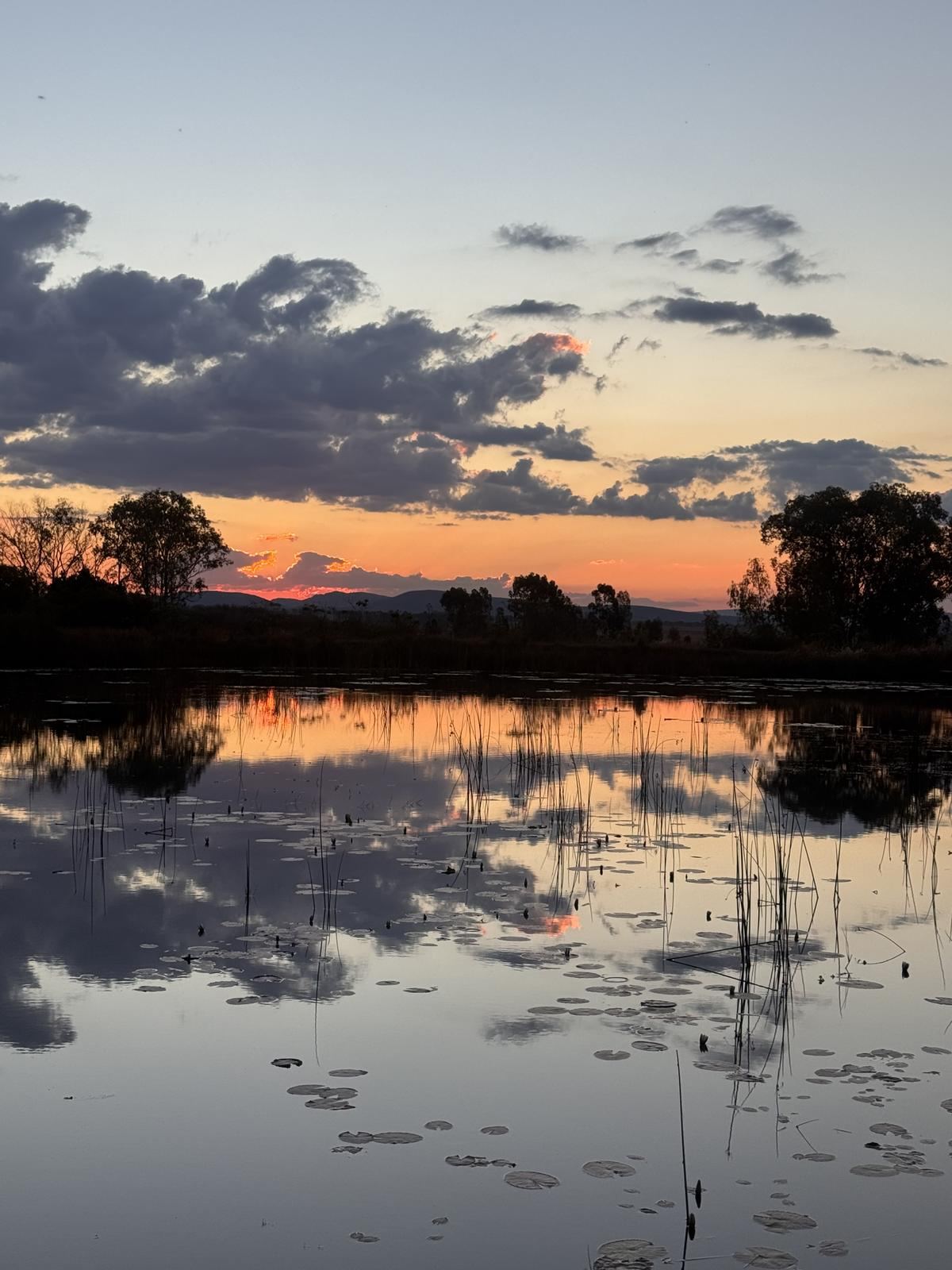
Nylsvley Nature Reserve protects part of the Nyl River floodplain near Mookgophong. It has been a Ramsar wetland of international importance since 1998, and more than 360 bird species have been recorded there, over 100 of them waterbirds.
The reserve is known for breeding colonies of Great Egret, Black Heron, Squacco Heron and Black-crowned Night Heron. All three of South Africa's bitterns occur, though you'll need patience and some luck to see them.
The reserve gate is about 40 minutes' drive from the cottage, so you can be there early, while the birds are busiest, and back for a late breakfast.
When to go
The floodplain fills only after good summer rains, roughly every two to four years. In a flood year the water spreads over thousands of hectares and the waterbirds gather in huge numbers. That's the trip birders plan around.
Dry years are still worthwhile. The thornveld and bushveld around the wetland hold their own species, including several owls. Check recent sightings reports before you book if you're hoping for a flood season.
Tips for your stay
- The self-catering kitchen suits birders' hours. Make coffee and pack breakfast before sunrise.
- Confirm the reserve's gate times and entrance fees before you set out, and ask at the office about access to the Vogelfontein hide.
- Bring binoculars on the farm too. The dam and the bush around the cottage are worth a slow walk.
What you might see
Two lists to start your trip list. The first covers common birds of the bushveld around Stoneridge, the second the wetland birds Nylsvlei is known for. Tell us what you spot and we'll add it to the farm list.
Around Stoneridge: the bushveld
- Crested FrancolinCalls loudly from the undergrowth at dawn and dusk.
- Swainson's SpurfowlRed face and throat; often on the farm roads early.
- Helmeted GuineafowlNoisy flocks moving through the veld.
- Grey Go-away-birdNamed for its nasal "go-away" call.
- African Grey HornbillFloppy flight between the thorn trees.
- Southern Yellow-billed HornbillThe big yellow bill is hard to miss.
- Black-collared BarbetPairs call in a fast duet.
- Golden-tailed WoodpeckerTaps on acacia branches.
- Fork-tailed DrongoAll black, with a split tail; hawks insects from a perch.
- Chinspot BatisSmall and busy, in mixed bird parties.
- Crimson-breasted ShrikeBright red front, in thickets.
- White-browed Sparrow-weaverUntidy grass nests in the trees.
- Southern Masked WeaverMales weave hanging nests in summer.
- Burchell's StarlingLarge glossy starling of open bushveld.
- Purple RollerSits on dead branches and fence posts.
- Brown-hooded KingfisherA kingfisher that hunts away from water.
- Woodland KingfisherSummerIts trilling call announces summer.
- Red-backed ShrikeSummerMigrant from Europe, on low perches.
- Black-chested Snake EagleHovers over open ground.
- Northern Black KorhaanMales call loudly in display flights over the grassland.
Around Stoneridge: at the farm dam
- African Fish EagleIts call carries across the water.
- Pied KingfisherHovers, then dives for fish.
- Malachite KingfisherTiny and bright, on reeds at the edge.
- Reed CormorantDries its wings on a perch after fishing.
- Grey HeronStands still in the shallows for long spells.
- Spur-winged GooseLarge dark goose, often in flocks.
- Blacksmith LapwingA metallic "tink-tink" alarm call.
- Hadeda IbisThe loud morning wake-up call.
Nylsvlei: 21 birds to look for
- Great EgretBreeds at Nylsvlei in some of the country's largest colonies.
- Black HeronBreeds hereSpreads its wings into an umbrella while fishing.
- Squacco HeronBreeds hereSmall buff heron of the flooded grass.
- Black-crowned Night HeronBreeds hereMost active at dusk.
- Purple HeronSlips through the reedbeds.
- Rufous-bellied HeronWet yearsA rare breeding visitor.
- Eurasian BitternWet yearsRare and secretive; listen for its booming call.
- Little BitternClambers through the reeds.
- Dwarf BitternWet yearsA summer breeding visitor.
- African Pygmy GooseTiny goose of the lily-covered pools.
- White-backed DuckA reserve highlight on open water.
- Hottentot TealSmall duck of shallow pools.
- Southern PochardDiving duck, often in flocks.
- Allen's GallinuleWet yearsSought-after breeding visitor.
- African SwamphenBig purple-blue rail in the reeds.
- Black CrakeRed legs, often right in front of the hides.
- African JacanaWalks across the lily pads.
- Black-winged PratincoleSummerFlocks over the flooded grassland.
- Glossy IbisDark, bronze-sheened ibis in the shallows.
- Marabou StorkCircles high over Vogelfontein.
- Streaky-breasted FlufftailWet yearsOne of the rarest birds on the list.
The Stoneridge lists are birds recorded in the same bushveld and wetland habitat around Naboomspruit and Nylsvlei, so sightings on the farm itself will vary. Several Nylsvlei specials only turn up when the floodplain floods. Sources: BirdLife South Africa, Nylsvley Nature Reserve, Ken Borland, De Wets Wild.
Ready to plan your stay?
Send us your dates and group size and we'll reply with a quote, usually within 24 hours.